
本サイトは広告を含みます
If you have nothing, there’s a way to start with nothing.
In my previous column, I wrote about securing production funds for the stage project STAND through crowdfunding.
In the end, we received about $3,200 USD in support from 62 people, which allowed us to pay our cast and staff in advance.
At that point, it felt like the foundation for the production was finally in place. But almost immediately, another challenge appeared—simpler on the surface, but probably the hardest one of all:
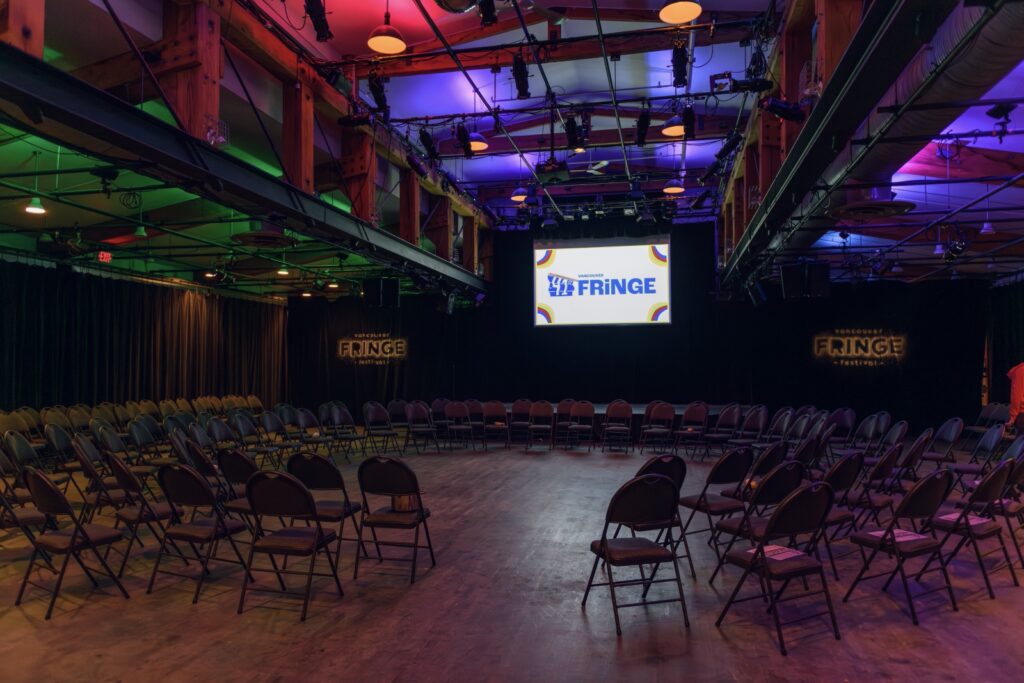
STAND was an immersive theatre piece in which the audience actively participated in the experience. That meant each performance could only hold up to 50 people. With six performances in total, the maximum number of tickets we could sell was 300. Each ticket was priced at $18, in accordance with Vancouver Fringe Festival regulations.
In the end, we sold 295 tickets. We fell just five short of a full sellout, but total attendance—including complimentary admissions—reached 314 people. On paper, there was still a little frustration left in that number. But at the same time, it felt like a result with real momentum behind it.
So this time, I want to look back on the process by organizing the things I couldn’t do, the options I chose not to rely on, and the trial-and-error that eventually shaped my approach.

目次
What I couldn’t fully make happen with STAND
What I couldn’t do ①: Run paid ads
The first option that came to mind was social media advertising. Instagram, Facebook, TikTok—set a target audience and deliver the promotion to theatre lovers around Vancouver. On paper, it seemed like a logical move.
But “getting seen” and “getting someone to buy” are two different things. And beyond that, there’s still another gap between buying a ticket and actually showing up at the theatre.
Even when I think about my own habits, I almost never go straight from seeing an ad on social media to buying a ticket right away.
Then there was the cost. Running ads would mean putting even more money into the campaign. With a project that had no track record yet, I kept asking myself: how much response could I realistically expect? And even if I sold one ticket, would the cost it took to sell that single ticket actually make sense?
The longer I sat with those questions, the clearer the answer became: at least this time, I wasn’t going to rely on social media ads.
What I couldn’t do ②: Ask influencers
The next idea was to ask people with influence to help spread the word.
I thought about reaching out to people in Vancouver’s theatre community who had visibility—people with strong platforms or large followings—and asking them to share the project. But that wasn’t very realistic either. I didn’t have those kinds of connections in the first place, and more importantly, I didn’t have enough material to make the ask convincing.
When you have no track record and no reviews yet, it’s hard to say, “Please promote this.” I hadn’t even fully figured out how to explain the piece myself.
What I couldn’t do ③: Get media coverage
I also considered sending out press releases and trying to get picked up by local media.
Fringe Festival has so many productions every year that being featured by the media can make a real difference. But the same wall showed up here too: there was no clear reason for them to cover it.
A stage production by an unknown Japanese creator making his first show—seen from an editor’s point of view, it makes perfect sense that it wouldn’t rank high on the priority list.
So what did I end up doing after all that trial and error?
No ads. No influencers. No plan built around media exposure.
Once I stripped away those options, what I had left was surprisingly simple.
Move on my own. Tell people directly, one by one.
I contacted as many people as I could who I had met in Canada. If I saw someone in person, I talked about the project right there.
On Instagram Stories, I kept posting every day—sharing the process, the rehearsals, and the progress of the production. For the people who had supported the crowdfunding campaign, I also opened up the dress rehearsal so they could experience the atmosphere of the piece firsthand.
There was nothing flashy about it. If anything, it was the kind of approach that takes the most time and effort.
And yet, little by little, something started to change.
“I’ll come with a friend.”
“I’m bringing my family too.”
It wasn’t the response I expected. I’d reached out to one person — and they brought along people I would never have reached on my own. The work was traveling further than my own arm could.
This wasn’t just me, of course. The cast and team kept introducing the show through their own circles too. 314 people showed up because all of us moved together. Paid ads alone would never have gotten us there.
I had only spoken to one person, and then that person would bring someone else. It felt like the work itself was reaching places my own hands couldn’t reach yet.
Of course, none of this was my achievement alone. The cast and the rest of the team kept introducing the project within their own circles too.
And I’m sure that kind of momentum could never have been created through ads alone.
In the end, we sold 295 tickets. If you only look at the number, maybe it still looks like we were one step short.
But what has stayed with me most strongly is not the number. It’s the faces of the people who came.
The back of a child walking away looking genuinely happy. Someone who traveled all the way from Japan just for this piece. Someone who stayed after the show, eyes shining, telling me what they felt.
And it wasn’t only the audience. The production was supported by far more than ticket buyers alone. Cast, staff, and volunteers all carried their part under limited conditions.
There were also people who helped with flyer distribution, putting up posters, and even staying through post-show strike and cleanup.
Behind those 295 tickets were that many faces—and that much accumulated time.
So where should a beginner start?
In this column series, I try not to make overly strong declarations. I still think of myself as being in the middle of the process.
Even so, there is one thing I can say clearly.
When you let go of the things you can’t do, one by one, what remains in the end is only what you actually can do.
Usually, that path isn’t glamorous. It takes time. It takes labor. And if you judge it only by efficiency, it probably doesn’t look like the smartest option.
Still, the faces of the people I met through that process are something I can still see clearly.
That was the way I was able to move forward when I had nothing.
1
2


コメント